
Ashlyn Baker
Dr. Williams
English 1102
March 18th, 2014
Word Count: 836
Taking off Emily Dickinson’s Clothes
Growing up in the 1800s, Emily Dickinson was surrounded by death, pain, and misery. But, unlike most people, she developed a strange fascination with the thought of dying and what exactly happens when one dies. Several of her poems (e.g.,”Because I Could Not Stop for Death,” “My Life Closed Twice Before Its Close,” and “I Heard a Fly Buzz When I Died”) include death and the afterlife as main themes. In these poems, her narrators never exhibit many of the typical human anxieties regarding death.
 In “Because I Could Not Stop for Death,” Dickinson personifies death as a gentleman who drives her along in a carriage. The fact that this poem humanizes death keys in on Dickinson’s personality. She was not afraid of death, but merely intrigued by it, as she mentions that “the carriage held but just ourselves/And immortality,” suggesting that there is nothing extraordinary about the carriage’s passengers (l. 3-4). An interesting image in this poem can be found in the line “We passed the setting sun” (l. 12), the sun being a metaphor for the beautiful aspects of a life’s ending. Also, “A swelling of the ground” (18) likely means a freshly dug grave. The reference to a grave in the poem adds to the dark mood. However, Dickinson suggests that the mood she establishes is not necessarily as bad as one may think. This poem, along with many of her others, comes across as soothing and relaxing, rather than sad or depressing, in spite of the grim theme.
“My Life Closed Twice Before Its Close” presents readers with more of a “What happens after death?” than “How does the process of dying look and feel?” theme. The first line says a great deal about what Dickinson went through in life. She feels as if she has died more than once (twice, in fact) even though she has not died at all. One would presume that something traumatic would have had to have happened to make her feel this way, but no horrifying events are revealed in the poem. The last lines, however, strike a note like no other: “Parting is all we know of heaven/And all we need of hell” (l. 7-8). “All we know of heaven,” posits the notion that the afterlife is a mysterious place, and the only way to find out what actually happens is to die. “All we need of hell,” signifies the pain felt by those who outlive someone close to them who has died. Truthfully, losing someone close (especially for Dickinson, who rarely left the house enough to make any friends) can be a heartbreaking ordeal, making the reader wonder if she lost a lover or immediate family member. Because the narrator has already died twice, it makes death seem like less of an ordeal to her, as if she’s grown accustomed.
Finally, another of Dickinson’s many views of death is evident in “I Heard a Fly Buzz When I Died.” What makes this poem so peculiar is that, while Dickinson is describing another one of her imaginings of death, she stops to draw the reader’s attention to something so small as a fly. She begins with the lines “The stillness in the room/Was like the stillness in the air/Between the heaves of storm” (l. 2-4). Naturally, these lines suggest a tranquil, empty feeling, as is common in Dickinson’s death poems. Then, toward the end, “There interposed a fly/With blue, uncertain, stumbling buzz” (l. 11-13). There are many possible explanations as to why the narrator’s focus is drawn to a fly. It is directed to the fly because, in this and many other Dickinson poems, death is a magical and painless thing, rather than something terrible. The cause of the narrator’s death is not revealed, though it likely is not pain free, considering the narrator’s searching for a distraction. In order for the narrator to die peacefully, she draws her attention to something small, and then she “could not see to see” (l. 16).
Dickinson’s narrators have all faced similar circumstances, yet they seem to have faced them at different times. In “Because I Could Not Stop for Death,” the narrator has died long ago. In “My Life Closed Twice Before Its Close,” Dickinson’s narrator has not yet died. Finally, in “I Heard a Fly Buzz When I Died,” the narrator has died very recently. So, these differing narrative points of view contribute heavily to the variations in Dickinson’s presentations of death.
The oddest part about Dickinson’s view of death is that she never seems to get upset about it. Her tone is always soft and elegant, as is the voice of anyone when reading her poetry. When Emily Dickinson did actually die in May of 1886, she was definitely at peace, and finally ready to leave this world behind and move on, perhaps, to a place better than, worse than, or even indifferent to ours. Her outlook at the moment may have been anything, however, given the variation in views on death found in her poetry.
Works Cited
Dickinson, Emily. “Because I Could Not Stop for Death.”Because I Could Not Stop for Death.
Brooklyn.cuny.edu, Feb. 2009. Web. 17 Mar. 2014. <http://academic.brooklyn.cuny.edu/english/melani/cs6/stop.html>.
Dickinson, Emily. “I Heard a Fly Buzz When I Died.” I Heard a Fly Buzz When I Died. N.p., 2009.
Web. 17 Mar. 2014. <http://academic.brooklyn.cuny.edu/english/melani/cs6/fly.html>.
Dickinson, Emily. “My Life Closed Twice Before Its Close.” My Life Closed Twice Before Its Close.
N.p., 2009. Web. 17 Mar. 2014.
<http://academic.brooklyn.cuny.edu/english/melani/cs6/closed.html>.
“Emily Dickinson’s Biography | Emily Dickinson Museum.”Emily Dickinson’s Biography |
Emily Dickinson Museum.N.p., 2009. Web. 15 Mar. 2014.
Tylor Hepner
Dr. Wilson
English 1101
01 November 2013
Are Video Games Art?
There is great controversy and debate in determining whether or not video games can be considered a medium of art.
First in this debate, the definition of “art” must be ascertained. Second, it must be decided which components in video games might qualify as art. A person’s credibility in saying that his interpretation is correct must also be questioned. When this topic is addressed in a debate, all the points that can be used to defend or attack video games’ case are based on the individual’s perception of art. Because of this, it always becomes a matter of subjectivity, similar to the matter of an individual’s taste or preference. An individual could claim that something is art, and it could qualify as art based on that person’s perception, given a person’s opinion cannot be changed. Debates revolve around this circular thinking; everyone argues for his or her definition of art and how this definition relates to video games.
The “matter of taste” concept is defined by which pieces of art the individual deems superior to others. In other words, people may ask what is good art, and what is bad art, according to the specific standards. It may also be asked which video games are better than others in their artistic merit. Everything is capable of greatness, and art is not limited to a specific medium. It is only limited by the artists’ interpretations or imagination. Dictionary.com offers a conventional definition of art, calling it “the quality, production, expression, or realm, according to aesthetic principles, of what is beautiful, appealing, or of more than ordinary significance.” A game that exemplifies this definition is Shadow of the Colossus, which is critically acclaimed for its high degree of artistic merit, and its engagement of the emotions in a way that is rarely seen (“The Great Debate: Are Games Art?”). When judged by similar standards, other games (such as Pac-Man) simply don’t compare. Colossus has a higher status of artistic achievement, and, therefore, could be called the better game. Not all video games are created equal, and as with any other medium, the quality varies. There will always be specific aspects of a game that are higher in quality than others. But these arguments are based on the assumption that video games are considered art. There also can be “good” paintings and “bad” paintings, but the genre is not questioned as an artistic form, whereas video games are constantly cross-examined and challenged.
Some critics believe it is not even a question of “good art” or “bad art.” They plainly state that video games are not art and can never be. Roger Ebert is a famous proponent of this suggestion and one of the first critics of high credibility and status to approach the subject. He has stated, “No one in or out of the field has ever been able to cite a game worthy of comparison with the great poets, filmmakers, novelists and poets.” He believes that games do not even compare to the “greats,” so could never end up being great. He thinks of art as usually the creation of one artist, and also points out that “the obvious difference between art and games is that you can win a game. It has rules, points, objectives, and an outcome.” People argue that there are games without points or rules, but Ebert counters, “…it ceases to be a game and becomes a representation of a story, a novel, a play, dance, a film. Those things you cannot win; you can only experience them.”
 Ebert also references some major viewpoints, one which relates to the commercial benefit of video game developers. Kellee Santiago, a designer and producer of video games whom Ebert references, claims that “games that invoke higher levels of joy, or of ecstasy,” are being rewarded by audiences with high sales figures. He argues, “The only way I could experience joy or ecstasy from her games would be through profit participation.” This has led to the idea that video games produce content solely based on consumer demand and profit. The people who argue this point say that the only intent of a video game is moneymaking, so the content cannot be art, for its intent is not poetic in the sense that it is meant to evoke an emotional response. Based on that viewpoint, these video games are made only for the sales, and, because this is the game’s sole purpose, its content is carelessly bland.
Ebert finally begs the question, “Why care, anyway?” He relates games to sports, in that Michael Jordan never said that his games were an art form. Jordan was content to enjoy playing his game. Indeed, contentment with just playing is what is marketed to gamers, and yet the want to see more in their games. Ebert questions, “Why aren’t gamers content to play their games and simply enjoy themselves?” He believes it is because gamers require a sense of validation. In saying it is considered as elite as an art form defends the gamers and validates their hobby.
On the opposite side of spectrum, one could ask why video games cannot be understood as an art form. It could be questioned why video games are attacked; those against the idea of “games as art” understand that painting is art, or sculpting is art, but they need to expand their view of the fundamental definition that is based on old principles. Obsolete definitions and standard concepts need to be cast aside, and we must broaden our understanding within this contemporary age just as the world’s technology and knowledge continue to flourish.
Artists are making good use of new tools to create and develop technology and bring creativity and imagination to soaring heights. We should not neglect and confine a whole new way of creating and think only about the world based on old concepts. Games are something new and different; they are just as capable of exploring the human condition and of making inspiring statements as any other medium. It is impossible to deny the high degrees of artistic expression that goes into them. Games demand a group of artists coming together a common purpose of conveying a message within the game, which they can accomplish in more ways than are possible in a still painting, storyboard, or movie. It’s a painting in motion. Like a film, it’s a visual book, but is also more than that. Game authors have a say in how a plotline plays out. This adds a level of emotion that can only be obtained through engagement and interaction. Games expand the ways that people know art, for they are the collaborations of undeniable artists and provide interaction that delves deeper into the substance of the story of a game, and a game’s high degree of artistic merit should be understood so the reality of its achievement as an art form can be fully realized and appreciated.
A painter is generally understood as an artist, and so is a sculptor, a musician, and an actor. If video games are not considered art, then that means that their designers, though they collaborate to create something together, cannot be considered artists. This cannot be so, as artistry is seen everywhere in life: there is a painting or drawing within every sky, sculpting in every object, writing that must tell more than one story, acting and performance with every motion, and music which amplifies to create great impact at just the right moments. Just like paintings, movies, storyboards, and books, video games are an expressive medium. The software is the tool to create, like a brush or pencil; a canvas filled with brushstrokes of oil paint is akin to a screen embodied with code. Art is said to transport people into another word, which is what video games do best.
Heavy Rain is one game in particular exemplifies just how much more emotionally involved one can be with a interactive video game than a movie. It also stretches the single predetermined experience into multiple experiences that could be based on one’s actions. Heavy Rain is game in the vein of a movie, in which the player has a choice as to how the game’s plot plays out, and each choice is a consequence which determines which ending will occur. It also shows how much more of an emotional tug a video game can achieve. For example, within the game, the player is a parent taking his child to the grocery store. The child has a bright red balloon, and while shopping in a dense crowd, the player loses track of him. Frantically, the player begins searching the tops of countless heads until the balloon is finally seen floating out of sight. Instead of watching the events of a parent losing his child and fighting his way to reach them, the player, vicariously, is the one who must get to him, and the emotional connection builds. The player “feels” the urgency more, for he is in the role of a parent who must reach his lost child. That extra emotional tug achieves more than what a film can do, for the user is engaged to see and feel the message of the artists. Increased time with a game like Heavy Rain increases an understanding of all of its specific intricacies, similar to taking time in designing and deliberating a painting, or a musical composition.
People who argue the point that games are not art, therefore, don’t understand the significance of the emotional aspects within a game. Of course, games vary in degrees of significance, but if someone has never been absorbed into a video game or even ever played one, it is harder for him to understand the reality of the achievements. Ignorance creates an obstacle to appreciation. Some cannot enjoy the game for what it was meant to be because of all the requirements. A person requires all of the objects and technology needed for gameplay: the television, the game system, the controller, and the game itself. Along with the tools, one also needs a general knowledge of how to operate the systems, as well as an idea of the game’s mechanics. There are more barriers to video games when compared to “sophisticated” art. There is only one requirement to appreciate traditional art, and that is sight. Everyone can look upon artwork, but it is harder for people to engage in a game in order to receive its message. If one takes the time, however, it will be worth that extra effort to immerse and engage.
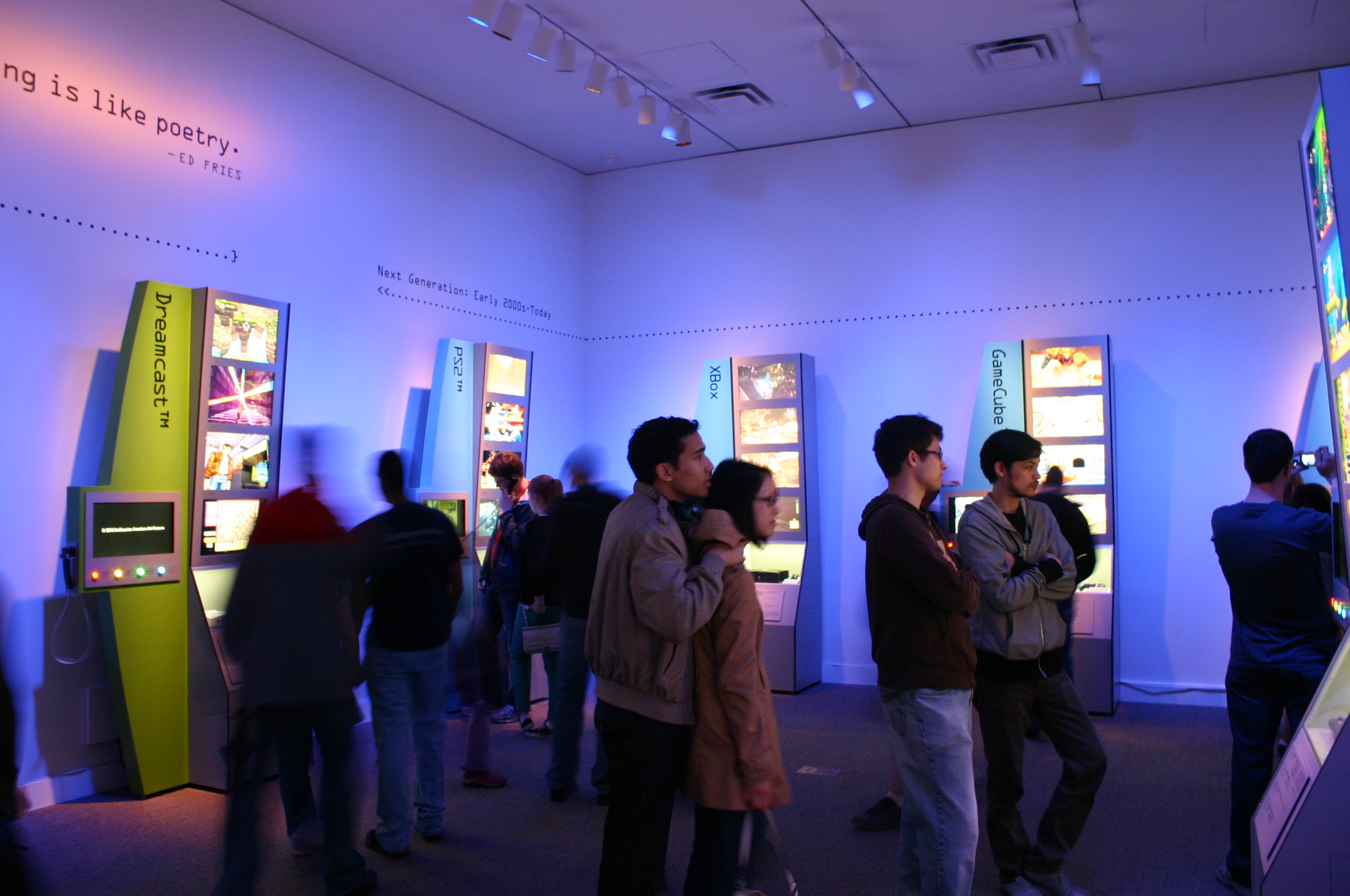
Whenever people are given the creative freedom to express themselves, art is created. The technology behind video games is becoming greater and achieving more each year. Realism is going beyond the imagination, and is stretching the limits that people might be having a hard time accepting. Steps are being made towards accepting video games into the category of traditional art. Museums are starting to display video game exhibits, in hopes of demonstrating that these works are just as valuable as any other medium of art. Activists in this cause are trying to prove that video games are just as sophisticated as any art piece, regardless of critical reception, and seek public acknowledgment and appreciation of their ability to function as art. For example, the “Art of Video Games” exhibit at the Smithsonian American Art Museum displays the emotional responses of people as they play a game (Tucker). These advances in the acceptance of video games are currently and actively taking place, demonstrating that people see this medium as growing and evolving.
The spectrum of degrees in artistic merit and the grand scale of art-related opinions that people have raises a fundamental point: What makes art great? It all goes back to the purpose or intent of the artwork. It is successful when the realization of a specific vision is completely captured. When the intent is fulfilled, there is success. There does not have to be comparison with other games or other works of art. If simplicity is the intention, and it is captured, it is successful. If the goal was to create the most realistic game and that realization encompasses the vision, it is considered great. Every artist has his own goal to realize a vision, and every person is unique. The methods will vary, and video games are a new medium for the artist to explore. The medium can allow for the realization of ideas in greater depths of the imaginations, and whatever the purpose is or how it’s conveyed, it is successful if realized.
Works Cited
Dictionary.com. Dictionary.com, n.d. Web. 02 Nov. 2013.
Ebert, Roger. “Video Games Can Never Be Art.” RogerEbert.com. N.p., n.d. Web. 12 Nov.
2013.
“The Great Debate: Are Games Art?” GameInformer.com. N.p., n.d. Web. 05 Nov. 2013.
Tucker, Abigail. “The Art of Video Games.” Smithsonian American Art Museum. N.p., n.d.
Web. 01 Nov. 2013.
